By Priya, Counselling Psychologist, TROS Care
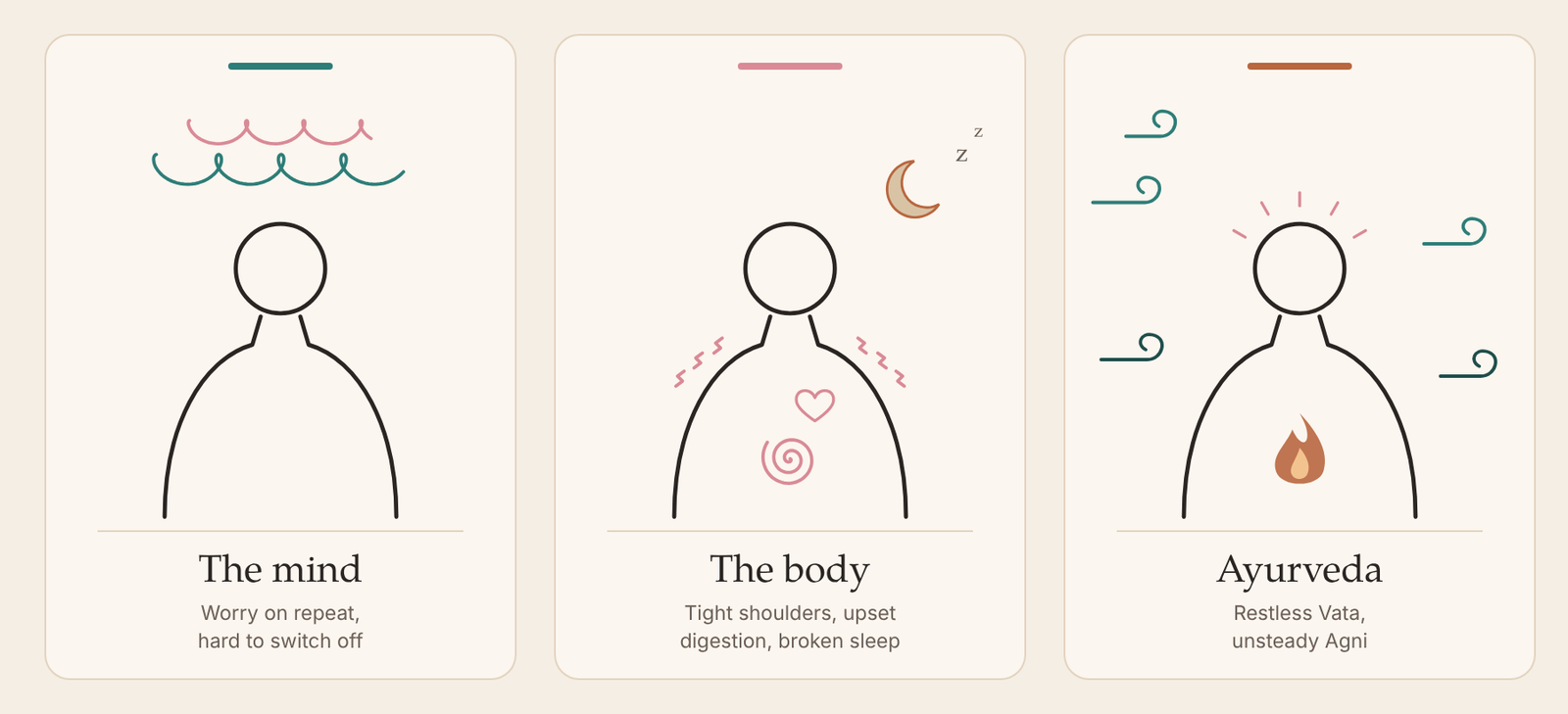
You know the feeling. Your mind will not stop running through tomorrow’s list. Your shoulders are up near your ears. Lunch sits heavy, or you skip it altogether. And at night, just when you need sleep, you are wide awake.
We usually call all of this “stress” and move on. But stress speaks in more than one language. Psychology describes it one way, your body expresses it another, and Ayurveda has its own, much older vocabulary for it. Listening to all three gives you a fuller picture, and more ways to respond.
Language one: the mind
In psychology, stress is what happens when the demands on you feel bigger than the resources you have to meet them. Your brain reads a deadline, a difficult conversation or a family worry as a kind of threat, and switches into alert mode.
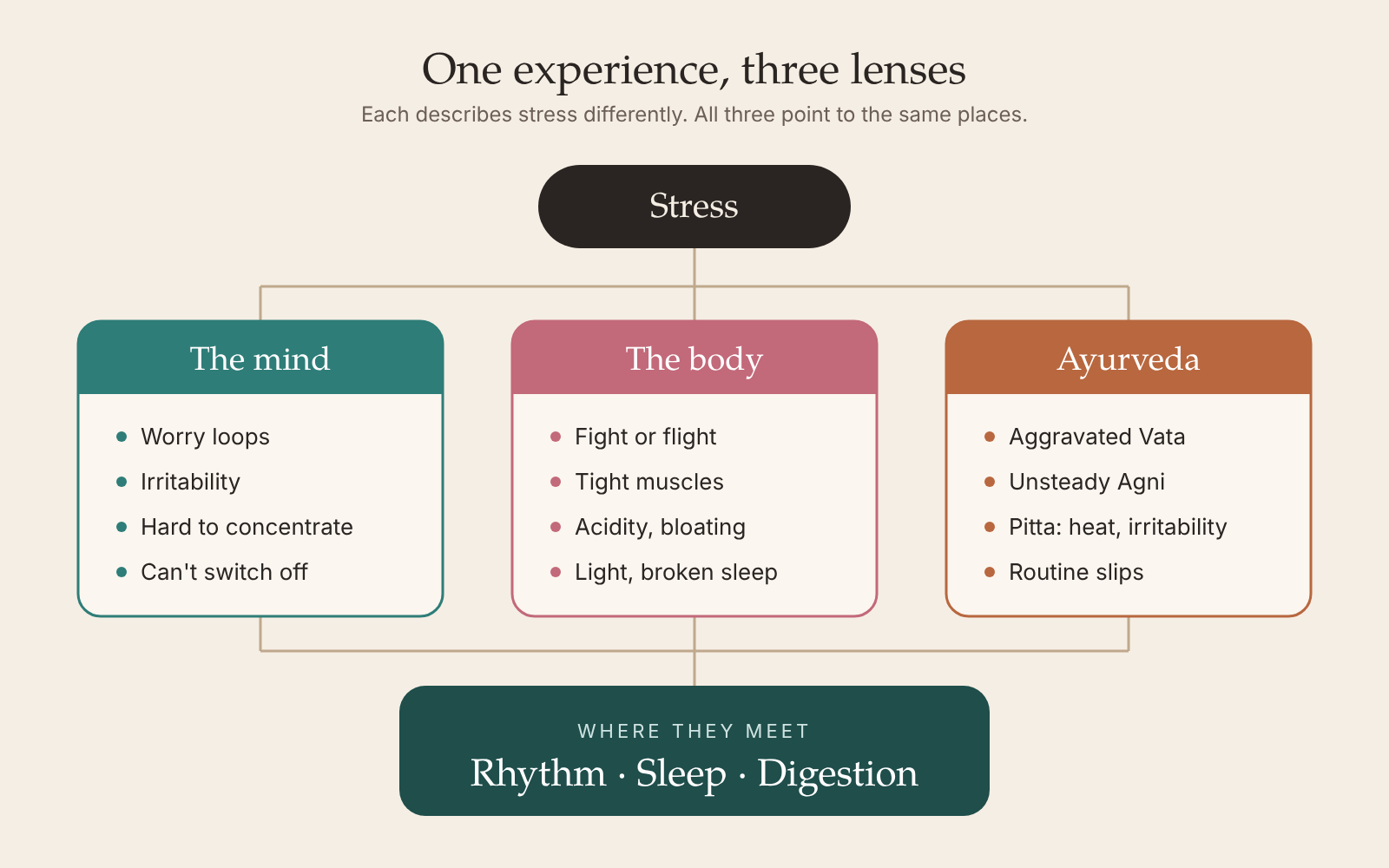
In that mode, thinking changes. Worry loops on repeat. Small things feel irritating. Concentration slips, and it becomes harder to switch off, even when the day is over. None of this means something is wrong with you. It is a protective system working overtime.
Language two: the body
That alert mode is not only in your head. Your nervous system shifts towards “fight or flight” and stress hormones rise. Muscles tighten, the heart beats faster, and breathing becomes quicker and shallower.
Digestion is one of the first things to change. The gut and the brain are in constant two-way communication, which is why stress can show up as acidity, bloating, loose stools or a lost appetite. Sleep suffers too, because a body on alert finds it hard to rest.
Language three: Ayurveda
Ayurveda describes health as balance between three doshas, the qualities that govern movement, transformation and structure in the body. Stress is often understood as a disturbance of Vata, the dosha of movement. When Vata is aggravated, the mind becomes restless, sleep turns light and broken, and routines start to slip.
Ayurveda also places great weight on Agni, the digestive fire. Irregular meals, eating in a hurry and late nights are seen as weakening it, which links stress directly to digestion. For some people, stress shows up more as heat and irritability, which Ayurveda relates to Pitta. Two stressed people may look quite different.
Where the three languages meet
These are different systems, and they should not be forced into one. Vata is not another word for cortisol, and Ayurveda and psychology answer different questions. But listen closely and they keep pointing to the same places: rhythm, sleep and digestion. All three say that a body under constant pressure needs steadiness, rest and nourishment to recover.
Small things to try this week
- Keep a rhythm. Eat and sleep at roughly the same times each day. Both psychology and Ayurveda value predictability for a stressed system.
- Slow your exhale. Breathe in for a count of four and out for a count of six, for a few minutes. Longer exhales help the body step out of alert mode.
- Eat warm, simple, unhurried meals. Sit down, put the phone away, and give digestion a chance.
- Notice where stress lands. Is it your thoughts, your stomach, your shoulders or your sleep? Naming it is the first step to working with it.
When to talk to someone
Stress is part of life, but it should not run your life. Consider support if it has lasted more than a few weeks, is affecting your sleep, work or relationships, or if you feel anxious or low most days. Persistent digestive symptoms should also be checked by a doctor.
At TROS Care in Alwarpet, you can speak with a counselling psychologist, an Ayurveda physician, or both.
Ready to start? Book a consultation at TROS Care, or call our therapy centre on +91 76958 30025.
This article is for general education and is not a substitute for personal medical or psychological advice.